The gala is suffocating.
I can feel it in the way the air sits too thick in my lungs, in the way the champagne flute trembles slightly in my hand despite my iron grip on composure. Crystal chandeliers cast everything in golden light that makes the wealthy look like angels and people like me look like we're drowning in honey.
I hate galas.
I hate the performative smiling, the calculated air-kissing, the way conversations circle endlessly around money and status like sharks detecting blood in water. I hate the way my mother materializes at my elbow every seventeen minutes to remind me to "smile more, darling, you look angry." I hate that she's right—I probably do look angry, because I am angry, and I've never been particularly good at lying with my face.
What I hate most is that I'm trapped here.
The Rousseau name demands it. The merger demands it. The carefully orchestrated future my father has mapped out like a general planning an invasion demands it. So here I stand in a Valentino gown that costs more than most people's cars, my auburn hair twisted into submission, my gray eyes carefully neutral, playing the role of the dutiful daughter at the Delacroix Foundation's annual charity gala.
It's a performance. It's always a performance.
"Isabelle, darling." A woman I vaguely recognize from the country club air-kisses near my cheek, careful not to disturb her makeup. "You look positively radiant. Though I do worry you're working too hard at the foundation. A woman your age should be focusing on—"
"On what?" I turn to her with a smile that shows all my teeth. "Finding a husband? Popping out heirs? Surrendering my brain at the altar?"
Her laugh is brittle. She excuses herself within seconds.
I take a long sip of champagne that tastes like liquid regret.
The ballroom is a sea of black tie and designer gowns, a choreographed dance of the obscenely wealthy pretending to care about the obscenely poor. There's a silent auction for African orphanages happening in the east wing. My father donated fifty thousand euros and spent twenty minutes telling everyone about it. The orphanages will see maybe thirty percent of that, if they're lucky. The rest gets swallowed by administrative costs and tax write-offs.
Welcome to charity, Rousseau-style.
I'm mentally calculating how long I need to stay before I can slip away to the smoking balcony when I feel it—that particular shift in air pressure that happens when something dangerous enters a room.
I don't turn around immediately. That's not how you survive in these circles. You let them come to you. You maintain control.
But I can feel him.
There's a scent first—bergamot and leather with something deeper underneath, something that smells like cedar and rain and expensive cologne that probably costs more than my first car. It's the kind of scent that doesn't announce itself; it simply exists, confident in its own presence.
Then there's the weight of attention.
Not the polite, social attention of people trying to see and be seen. This is different. This is the focused intensity of a predator who's spotted something interesting.
I turn slowly, my champagne flute held at the perfect angle, my expression carefully curated into cool indifference.
And I stop breathing.
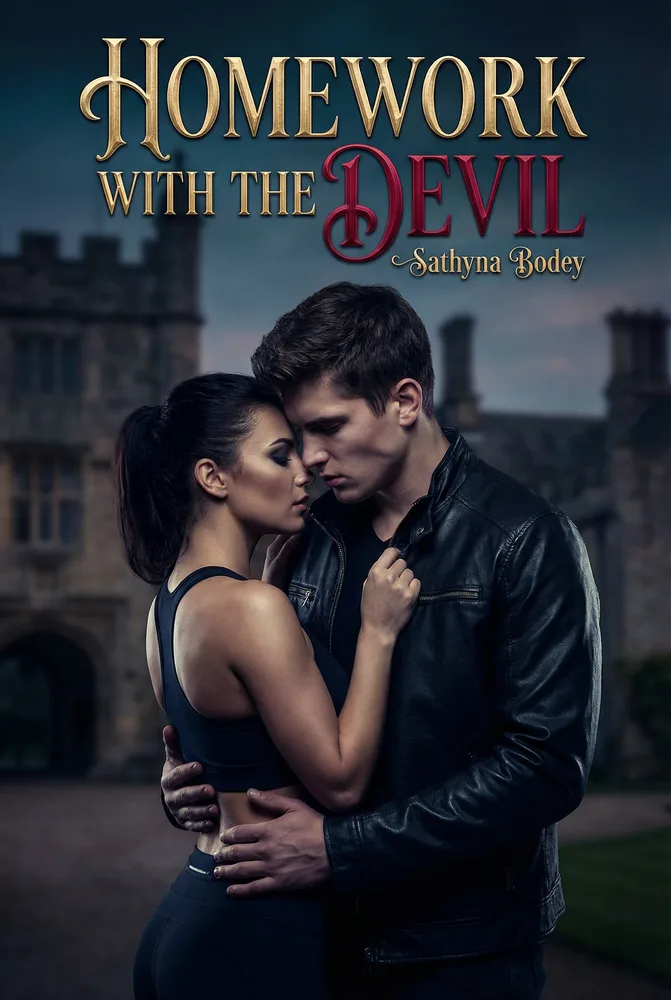
He's tall—genuinely tall, not just "tall for a man" but the kind of tall that makes other men look smaller. His suit is charcoal gray, tailored so precisely it might as well be painted on, and he wears it the way other men wear armor. His shoulders are broad enough to suggest he actually does something besides attend galas and manipulate stock portfolios. His dark hair is swept back from a strong jaw, and his eyes—
Christ, his eyes.
Storm gray, the color of rain on slate, and they're looking at me like I'm the only interesting thing in a ballroom full of boring, predictable people.
I feel my heart rate spike and hate myself for it.
"Isabelle Rousseau." His voice is dark velvet over gravel, the kind of voice that sounds like it could command armies or seduce countries. "I was wondering when we'd meet."
"Were you?" I keep my tone light, detached, the verbal equivalent of a shrug. "How flattering. I don't believe we've been introduced."
He smiles, and it's not a nice smile. It's the smile of someone who knows exactly how dangerous he is and finds it amusing that you don't yet.
"Adrian Moreau."
Of course it is.
Adrian Moreau. The self-made billionaire who built a tech empire from nothing. The man who's been featured on the cover of Forbes twice in the last year. The one my father mentioned with that particular tone of voice that means he's both impressed and threatened—a combination that usually makes him do something stupid.
"The Adrian Moreau?" I tilt my head, letting a smile play at the corners of my mouth. "I've heard the rumors. They say you're brilliant but impossible to work with. That you've burned through business partners like other people go through coffee. That you're essentially a very expensive sociopath in a very expensive suit."
Something flickers in those storm-gray eyes. Surprise, maybe. Or amusement.
"And what do you think?" He moves closer, and I catch another hit of that scent—cedar and bergamot and something that smells like danger. "Do I seem like a sociopath to you?"
I don't step back. I've learned that stepping back is surrender, and I don't surrender. Not to anyone. Not ever.
"I think," I say carefully, "that anyone who's actually a sociopath would never admit to it, which means you're either not one, or you're smart enough to know that lying is more effective than honesty. Either way, not particularly reassuring."
His laugh is low and genuine, and it does something strange to my chest. It sounds like he actually finds me funny, which is a rare thing. Most people find me sharp. Cutting. Difficult. Funny is not usually the descriptor.
"Your reputation doesn't do you justice," he says.
"My reputation is carefully curated to keep people like you at a distance." I take a sip of champagne, buying myself a moment to steady my breathing. "It's working less effectively than I'd hoped."
"Because your reputation is a lie." He says it simply, factually, like he's pointing out the weather. "You want people to think you're cold. Untouchable. A marble statue with a cutting wit and no actual feelings underneath."
Heat flares through me—not attraction, though that's definitely happening too, but something sharper. Anger. How dare he?
"You don't know anything about me."
"I know you've been standing in this ballroom for at least forty-five minutes, and you've smiled exactly twice, both times with your teeth and none of your eyes. I know you're wearing a dress that costs more than most people's monthly salary and you look like you'd rather be literally anywhere else. I know your father's been watching you all night like he's afraid you'll spontaneously combust if he stops monitoring you for thirty seconds." He steps closer, and the space between us shrinks to something dangerous. "And I know that you're the most interesting person in this room, which is why you're terrified."
"I'm not terrified." My voice comes out steady, which is impressive considering my heart is trying to escape through my ribs. "I'm unimpressed."
"Liar." He says it without heat, like it's just an observation. "Your pupils are dilated. Your breathing is shallow. You're gripping that champagne flute like it might escape if you let go. And you haven't looked away from me once."
"That's called making eye contact. It's basic social courtesy."
"That's called being unable to look away, and we both know it." He tilts his head, studying me like I'm a particularly interesting puzzle. "The question is why. Is it because I'm right, and you're terrified that someone actually sees through your carefully constructed ice queen persona? Or is it something else entirely?"
I should walk away.
I should turn on my heel, walk directly to the smoking balcony, and pretend this conversation never happened. I should do what I've done my entire life—maintain control, maintain distance, maintain the carefully constructed walls that keep people from getting too close.
Instead, I say, "If I'm an ice queen, what does that make you? You're standing here, trying to psychoanalyze a stranger at a gala. That's not the behavior of someone with a full emotional life."
"No," he agrees, and there's something in his voice that sounds almost like vulnerability, which is probably a trick. "It's the behavior of someone who's spent so long around people who are only interested in his money that he doesn't remember what genuine conversation feels like."
The honesty catches me off guard.
I'm so used to people posturing, performing, strategizing. But this—this sounds real. Which is probably exactly what he wants me to think, which means I'm being manipulated, which means I should definitely leave.
I definitely should leave.
"That's a very convenient excuse for being a sociopath," I say instead.
"I'm not a sociopath." He steps closer, and now the space between us is so small I can feel the heat radiating from his body. "I'm just someone who's learned that wanting things is dangerous. That needing people gets you destroyed. That the only way to survive is to want nothing and need no one."
"And does it work?" I ask softly. "The not wanting, the not needing?"
"No," he says. "Which is why I'm standing here talking to you instead of doing literally anything else."
My breath catches.
There's a moment—just a moment—where everything seems to pause. The noise of the gala fades to a distant hum. The other guests blur into insignificance. There's just him and me and the space between us that feels like it's vibrating with electricity.
Then someone bumps into him from behind, and the moment shatters.
Adrian reaches out instinctively to steady me, his hand landing on the small of my back, and I feel it like a brand. The warmth of his palm seeps through the thin fabric of my dress, and every nerve ending in my body suddenly becomes aware of exactly where his fingers are resting.
"We should probably get out of here," he says quietly.
"I don't know you."
"I know. That's not an answer."
He's right. It's not an answer. It's a deflection, which he's already called me out for.
"The terrace," I hear myself say. "There's a terrace on the east side of the building. It's usually empty."
"Lead the way."
I should refuse. I should extract myself from this situation and retreat to my carefully controlled life where men like Adrian Moreau don't exist to upend my equilibrium.
But his hand is still on the small of my back, and I'm apparently not as strong as I thought I was.
I move through the crowd, hyperaware of his presence behind me. His hand never leaves my back, possessive and warm, and I can feel the weight of stares as we pass. People are noticing. People are always noticing, and they'll be talking about this tomorrow, and my father will hear about it, and there will be consequences.
I don't care.
That's the terrifying part. I actually don't care.
The terrace is mercifully empty, a sweep of marble overlooking the city lights. The night air is cool against my skin, and I finally turn to face him fully.
"So," I say, and my voice sounds strange in my own ears—softer, less defended. "You're Adrian Moreau. The man who's apparently going to be a permanent fixture in my nightmares."
"Your nightmares?" He leans against the marble railing, studying me with those impossible eyes. "That's interesting. I was thinking the same thing about you."
"That I'm going to be in your nightmares?"
"That you're going to be in everything." He says it like it's a fact, not a flirtation. "Dreams. Thoughts. Conversations. I'm going to be thinking about what you said to me tonight for a very long time."
"You don't know me."
"I know you're brilliant. I know you're funny. I know you're terrified of letting anyone close enough to hurt you, which means someone has hurt you very badly." He takes a step toward me. "And I know that you're attracted to me, which terrifies you even more than the rest of it."
"Arrogant," I say, but my voice doesn't have any bite in it.
"Observant." He's close enough now that I can smell the cedar and bergamot again, and it's making it very difficult to think. "Am I wrong?"
"Yes."
"Liar."
"You keep calling me that."
"Because you keep lying." He reaches out, and for a moment I think he's going to touch my face, but instead his fingers find the loose strand of hair that's escaped my carefully constructed bun. He tucks it gently behind my ear, his knuckles brushing against my jaw, and I feel it everywhere. "You're not attracted to me. You don't want to stand here with me. You're not thinking about what it would feel like if I kissed you right now."
My breath catches.
"If you kissed me," I say carefully, "I would probably break your nose."
"Would you?"
"Definitely."
"And yet you're not moving away."
He's right. I'm not moving away. I'm standing completely still, and my heart is racing so fast I'm pretty sure he can hear it, and I am absolutely, positively thinking about what it would feel like if he kissed me.
This is a disaster.
This is the worst possible thing that could happen, because Adrian Moreau is the kind of man who could destroy me, and I've spent my entire life building walls specifically to keep men like him out.
"I'm leaving," I announce, but I don't move.
"No, you're not."
"Yes, I am."
"Isabelle." He says my name like it's a word he's been learning, like he's trying it out on his tongue and finding it tastes like something he wants more of. "Stop lying to yourself. Stop lying to me."
"I'm not—"
He reaches out, and this time he does touch my face. His hand is warm and large, and it covers half my jaw, his thumb tracing my cheekbone with a gentleness that feels like a contradiction coming from someone so obviously dangerous.
"Tell me you don't want this," he says quietly. "Tell me you want me to walk away, and I will."
The terrifying part is that he means it. If I told him to leave, he would. He'd walk away without a second glance, and that would be the end of it.
The even more terrifying part is that I don't want him to walk away.
"This is a mistake," I whisper.
"Probably." His thumb continues its slow journey across my cheekbone, and I'm pretty sure I've forgotten how to breathe. "But I've spent my entire life making the smart choice, and it's left me exactly as empty as you are. So maybe we should make the mistake together."
I should say no.
I should walk away, go back to my carefully controlled life, marry whoever my father has selected, and pretend this night never happened.
Instead, I reach up and grab his wrist, holding his hand in place against my face.
"If you're going to do this," I say, "you should know that I'm going to break your heart. I'm going to hurt you. I'm going to disappoint you in ways you can't even imagine."
"I know."
"You don't—"
"I know," he repeats, and there's something in his voice that sounds like he's made a choice about this. About me. "I don't care. I'd rather have you break my heart than spend another day in a room full of people who don't see me at all."
The kiss happens before I can talk myself out of it.
It's not gentle. It's not soft or tentative or any of the things that first kisses are supposed to be. It's urgent and consuming and tastes like cedar and bergamot and the end of my carefully controlled life.
His hand moves to the back of my neck, pulling me closer, and I grab fistfuls of his suit jacket because I need something to hold onto or I'm going to drown in this. His other hand slides down to my waist, and I feel the heat of his palm through the thin fabric of my dress, and it's like every nerve ending in my body suddenly becomes aware that it's alive.
I've been kissed before. I've done the whole dating thing, the whole casual thing, the whole trying-to-have-a-normal-relationship thing. None of it felt like this.
None of it felt like falling.
When we finally break apart, I'm breathing like I've run a marathon, and Adrian looks like he's been hit by something large and unexpected.
"Fuck," he says, and it sounds reverent.
"That was—" I can't finish the sentence because I don't have words for what that was.
"A mistake," he supplies. "You said so yourself."
"The biggest mistake," I agree, but I'm still holding onto his jacket.
"We should probably stop."
"Definitely."
Neither of us moves.
"My father is going to have an aneurysm if he finds out about this," I say.
"Why? Because I'm not the right kind of wealthy? Because I didn't inherit my money?" There's something sharp in his voice now, something that sounds like old wounds. "Or because he's already selected someone else for you?"
"All of the above." I pull back slightly so I can see his face. "There's a merger. My father and the Delacroix family are consolidating shipping routes. I'm part of the deal."
"You're part of the deal." He says it flatly, like he's processing this information and finding it distasteful. "Like a piece of property."
"Like a piece of property," I agree. "Which is why this is a bad idea. Which is why we should probably—"
"Isabelle."
I look up at him.
"I don't care about your father's merger. I don't care about shipping routes or consolidation or any of the other bullshit that passes for strategy in your world." He tilts my chin up with one finger. "I care about this. About you. About the fact that when I was in that ballroom drowning in boredom and expensive cologne, the only thing that made sense was finding you."
"That's insane," I whisper.
"Probably."
"We're going to destroy each other."
"Definitely."
"This ends badly."
"Almost certainly."
He kisses me again, and I stop arguing with him, because arguing requires thinking, and thinking is the last thing I want to do right now.
When we finally separate, the night air is cool against my flushed skin, and I can hear the distant sounds of the gala continuing inside—the laughter, the music, the endless performance of the wealthy.
"We should go back," I say, but I don't move.
"We should." His hand finds the small of my back again, and he pulls me against his side. "In a minute."
We stand there on the terrace, overlooking the city, and I can feel the walls I've spent my entire life building beginning to crack.
"This is going to be complicated," I warn him.
"I know."
"My father won't allow it."
"I don't care what your father allows."
"You don't know him. You don't know what he's capable of—"
"Then help me know." He turns to face me fully, and there's something in his expression that looks almost like tenderness, which is dangerous. "Help me understand. But don't tell me this isn't happening, because we both know it is."
He's right.
This is happening.
And I have absolutely no idea what to do about it.
"We should go back inside," I finally say.
"We should."
He takes my hand, and together we walk back toward the ballroom, toward the gala, toward the consequences of what we've just done.
I have no idea that Margot Delacroix has been watching us from inside, her perfectly manicured fingers wrapped around a champagne flute, her beautiful face twisted into something that looks like rage.
I have no idea that this kiss—this one, perfect, terrible kiss—has just declared war.
All I know is that Adrian Moreau is still holding my hand, and I'm going to let him, and everything is about to change.