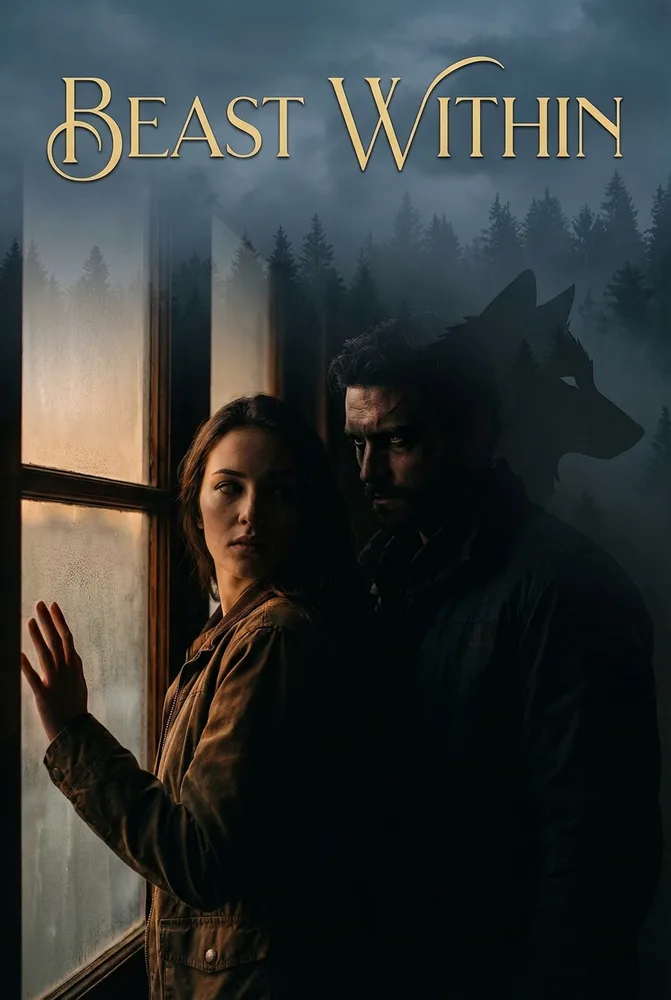
Three days of palace walls was enough to make me understand why prisoners go insane.
Not that I was a prisoner, technically. Kael had been careful about his language. "Guest," he called me. "Under my protection," he said, as if those words didn't translate to the exact same thing: trapped.
The palace was beautiful in that suffocating way of all gilded cages. Every corridor led to another corridor, every window showed me grounds I wasn't allowed to roam alone. I'd tried once—ventured past the west wing with the casual confidence of someone who hadn't yet learned the palace's invisible boundaries. A guard had appeared within minutes, polite but immovable, redirecting me back inside like I was a lost child.
So I'd stopped trying.
Instead, I'd developed a routine: wake up in the obscene four-poster bed, shower in the bathroom that was larger than my entire apartment in the city, eat breakfast in my room while pretending not to notice the guards stationed outside my door, and spend the rest of the day reading in the library or walking the same three corridors until I could map them with my eyes closed.
It was exactly as thrilling as it sounds.
Tonight, I'd snuck out during the dinner hour when most of the household staff was occupied. Kael had meetings—something about pack politics that required his presence in the war room. The word "war" had made me pause, but he'd waved it away with the kind of dismissal that suggested I was worrying about nothing, which meant there was definitely something to worry about.
I'd learned not to ask questions he didn't want to answer.
The palace grounds sprawled across what had to be hundreds of acres, all manicured lawns and carefully curated wilderness. I'd seen it from the windows—rolling hills that looked like they'd been painted on, tree lines that formed natural barriers, stone walls that probably cost more than my education.
But I'd never actually explored it.
The thought had been building for days, a restless itch under my skin that no amount of reading or pacing could scratch. I needed space. Real space, not the suffocating luxury of rooms with too many windows and not enough exits.
So when the dinner hour came and Kael disappeared into his meetings, I'd simply walked out.
The air outside was different—cooler, sharper, alive in a way the palace air wasn't. It smelled like rain coming, like earth and growing things, and underneath it all, something wild and ancient that made my hindbrain sit up and take notice. The scent of the land itself, maybe. Or just the scent of freedom I wasn't supposed to have.
I'd expected guards to stop me. They didn't. Either they'd been told to let me roam the grounds, or they'd decided I wasn't worth stopping. Either way, I wasn't going to complain.
The sun was setting, painting the sky in shades of gold and purple that probably had some pretentious name. The light was soft and forgiving, the kind that made even my scarred hands look almost beautiful. I walked without direction, just following the pull of my own restlessness, until the manicured lawns gave way to something wilder.
Trees rose up in front of me—old ones, massive, their trunks thick as cars. They formed a natural archway, and beyond them, the light was different. Greener somehow. More alive.
I stepped through.
The garden wasn't on any of the palace maps I'd seen. It existed in a pocket of the grounds like a secret, walled in by ancient stone that had weathered centuries of weather. The walls were covered in climbing vines, ivy and jasmine and things I didn't have names for, and they opened into a space that felt less like a garden and more like a sanctuary.
It was small—maybe the size of my entire apartment—and it was perfect.
Raised beds overflowed with herbs and vegetables, their leaves still jeweled with water from a recent rain. Fruit trees heavy with late-season produce created a canopy overhead, their branches intertwining like lovers' hands. A stone bench sat in the center, worn smooth by decades of use, and a fountain that had probably been beautiful once burbled quietly in the corner, its water catching the last light of day.
It smelled like earth and growing things and possibility.
I stood in the archway for a long moment, waiting for someone to appear and tell me I wasn't supposed to be here. No one did. So I stepped inside.
The moment my feet crossed the threshold, something in my chest unclenched. I hadn't realized how tight I'd been holding myself until the tension started to release, and the sudden absence of it made my knees feel weak.
I walked to the bench and sat down, and for the first time in three days, I could breathe.
The garden was quiet. Not the oppressive quiet of the palace, but a living quiet, full of small sounds—the burble of the fountain, the rustle of leaves in the evening breeze, the distant call of birds settling in for the night. The light was fading, painting everything in shades of gold and purple, and I felt something dangerous blooming in my chest.
Peace.
I hated it immediately.
Peace was what you felt before everything fell apart. Peace was what you felt when you weren't paying attention. Peace was a luxury I couldn't afford, not when I was trapped in a palace full of wolves who wanted something from my blood, not when I didn't know what the endgame was, not when every moment felt like I was standing on the edge of a cliff and someone was slowly pushing me closer to the drop.
But even knowing that, I couldn't make myself leave.
I sat on the bench and watched the light die, and tried not to think about how much I wanted to stay here forever.
---
I didn't hear him arrive.
That was the first sign that something was wrong—my hypervigilance, my carefully cultivated awareness of my surroundings, had shut down completely. I was so lost in the garden, in the dangerous luxury of not-thinking, that Kael was standing in the archway before I even registered his presence.
The golden light had faded to twilight, and he was backlit by the last of the sun, his silhouette broad and unmistakably lupine. My body reacted before my brain could catch up—pulse accelerating, breath catching, every nerve ending suddenly on high alert.
"I wondered where you'd gone," he said softly.
His voice was different out here. Calmer. Less like a king and more like just... a man.
I should have felt trapped. Instead, I felt something that was dangerously close to relief.
"Didn't know this place existed," I said, keeping my tone casual. "Seemed like it was worth investigating."
He stepped into the garden, and the archway closed behind him like a door. The light was almost gone now, just the last purple dregs of twilight, and his amber eyes caught what little remained and held it, glowing faintly in the gathering dark.
"My mother's garden," he said, walking toward me with that controlled grace that made him seem like he was moving in slow motion. "She designed it when my father was still alive. Before... everything."
He didn't elaborate on the "everything," and I didn't ask. I'd learned that lesson.
Instead, I watched him approach, my body going through all the predictable reactions—racing pulse, shallow breathing, the sudden awareness of exactly how much space existed between us. Which was too much. And somehow not enough.
He sat on the bench beside me, leaving a careful distance between us. Not touching, but close enough that I could feel the heat radiating from his body, close enough that his scent—wild honey and cedarwood and something ancient and primal—washed over me like a wave.
"You shouldn't be out alone," he said, but there was no reprimand in his voice. Just... observation.
"Neither should you," I countered. "Don't you have meetings? Pack politics? War room strategizing?"
"Delegated," he said simply. "Sylas is capable."
There was something in his tone when he said Sylas's name, something I couldn't quite identify. Resignation, maybe. Or distaste. I filed it away.
"So you just... left. To find me in a secret garden." I turned to look at him, raising an eyebrow. "That's either very romantic or very controlling, and I haven't decided which yet."
He smiled—a real smile, not the carefully curated expression he wore in public. It made him look younger, less burdened.
"Does it have to be one or the other?" he asked.
"In my experience? Yes."
He was quiet for a moment, his amber eyes fixed on the fountain in the center of the garden. The water had turned silver in the moonlight, which had apparently decided to make an appearance while I was busy being distracted by his proximity.
"Tell me something," he said finally. "Something true."
"That's vague."
"I know."
I should have deflected. Made a joke, changed the subject, reminded him that I wasn't here by choice and therefore didn't owe him anything, including truth. But something about the garden—or maybe something about him, sitting beside me in the dark like he was just another person instead of a king—made me hesitate.
"What do you want to know?" I asked.
"What was your childhood like?"
It was such a simple question. And so impossibly difficult.
"Foster care," I said, because lying seemed pointless. "Moved around a lot. Different homes, different families, different rules I could never quite figure out. Some of them were okay. Some of them were..." I trailed off, searching for a word that could encompass the particular brand of cruelty that came from people who took in foster kids for the stipend.
"Cruel?" he offered gently.
"Indifferent," I corrected. "Cruelty implies they cared enough to hurt me on purpose. Most of them just... didn't care. I was a problem to be managed, a check that came in the mail, something to be endured until I aged out of the system."
He was quiet, and I waited for the pity. It didn't come.
"You raised yourself," he said. It wasn't a question.
"Had to. No one else was going to do it."
"And now?"
"Now I'm here," I said flatly. "In a palace. Being held by a wolf king who wants something from my blood. So I guess some things don't change—I'm still just a problem to be managed."
The words came out sharper than I intended, and I immediately regretted them. Not because they were untrue, but because they revealed too much—the fear underneath, the way I was bracing for abandonment like I always did.
But instead of defending himself, Kael just nodded slowly.
"Fair," he said. "I deserve that."
I turned to look at him, surprised by the absence of defensiveness. "Most people would argue."
"Most people aren't me."
There was something in his voice—a weariness that ran deeper than just the day's exhaustion. It was the weariness of someone who'd been carrying weight since childhood, who'd never had the luxury of being just a person.
"What was yours like?" I asked, surprising myself. "Your childhood?"
He was quiet for so long I thought he wouldn't answer. The fountain burbled softly, and somewhere in the distance, a night bird called out.
"Golden," he said finally. "Literally and figuratively. My father was king, my mother was beautiful, and I was the heir everyone had been waiting for. I was groomed for power from the moment I could walk—lessons in strategy, in diplomacy, in how to lead wolves who would tear out your throat if they smelled weakness."
He paused, his amber eyes fixed on the fountain.
"I never got to choose anything," he continued. "Not my future, not my role, not the expectations everyone had for me. Every decision was already made before I had the chance to make it myself. And when my father died—" He stopped, and I watched his jaw tighten. "I became king overnight. There was no transition, no time to prepare. Just suddenly the weight of everyone's survival on my shoulders."
"That's not fair," I said quietly.
"No," he agreed. "It's not."
We sat in silence for a while, and it wasn't the comfortable silence of two people who'd known each other for years. It was the dangerous silence of two people who'd just shown each other something real, something that couldn't be unseen.
"I get it," I said finally. "The not choosing. The weight of being what everyone needs you to be instead of who you actually are."
He turned to look at me, and in the moonlight, his eyes seemed to glow brighter. "Is that what I am to you? A role instead of a person?"
"I don't know you well enough to say," I answered, but it was a lie. I knew him better than I wanted to, in ways that had nothing to do with the facts of his life and everything to do with the way he made me feel—seen in a way I'd never been seen before, which was either the most dangerous or the most necessary thing that had ever happened to me.
"Then let me be someone," he said. "Right now. Not a king, not a captor. Just... someone sitting in a garden with you."
He reached out slowly, giving me time to pull away, and took my hand. His palm was warm, his grip gentle but firm, and the moment his skin touched mine, every nerve ending in my body lit up like a circuit board.
"Okay," I whispered, and I wasn't sure if I was agreeing to his proposal or just accepting the inevitable.
We sat like that for a while, our hands intertwined, and it felt like the most intimate thing that had ever happened to me. Not because of what it was, but because of what it meant—a moment of genuine connection with someone who'd seen my worst and hadn't flinched.
The moonlight shifted, painting everything in silver, and he turned toward me. His free hand came up to cup my cheek, his thumb tracing the sharp line of my cheekbone with a gentleness that made my chest ache.
"I want to kiss you," he said, his voice rough. "But I need you to know that I want it. That this is something you're choosing, not something I'm taking from you."
My heart was pounding so hard I thought it might break through my ribs. Every part of me wanted to close the distance between us, to taste him, to lose myself in the safety of his arms.
But the fear was louder.
"I can't," I said, and the words came out broken. "Not yet. I don't... I don't know if I want you or if I just want to feel like I have a choice for once. And I can't tell the difference right now."
He was quiet for a moment, and then he nodded slowly. His hand fell away from my face, but he didn't release my hand.
"Then we wait," he said simply. "Until you know. Until you're sure."
"You'd do that?" I asked, surprised by the absence of pressure. "Just... wait?"
"Yes."
There was no hesitation in his voice, no sense that he was calculating odds or manipulating me. Just a simple, absolute statement of intent.
It terrified me more than anything else he could have said.
"Why?" I whispered.
He was quiet for a long moment, his amber eyes fixed on our intertwined hands.
"Because you're the first person to see me as something other than a crown," he said finally. "And I'm not willing to lose that."
The words hung in the air between us, heavy and dangerous, and I realized with a sinking feeling that I was in trouble. Real trouble. The kind that couldn't be solved with self-defense training or sarcasm or any of the armor I'd spent my entire life building.
Because somewhere between the palace walls and this secret garden, I'd started to believe that maybe—just maybe—someone could want me for something other than what I could give them.
And that was the most terrifying thing of all.
"We should go back," I said, pulling my hand away gently. "Before someone notices we're gone."
He didn't argue. Just stood and offered me his hand, and when I took it, he pulled me to my feet with careful strength.
We walked back through the archway in silence, and I tried not to think about how his hand felt in mine, or how hard it was going to be to let it go.
Behind us, the garden disappeared into darkness, and I wondered if I'd ever be able to find it again, or if it would remain a secret accessible only in moments when my defenses were too low to protect me.
Either way, I knew I'd be back.
And that was the real problem.