The red dress was still draped across my bedroom chair like a crime scene when I woke up at three in the morning, heart hammering against my ribs as though I'd been running.
I hadn't been running. I'd been lying in the dark, replaying the moment Adrian's hand found the small of my back, the way his fingers had curved against the silk as though claiming territory. The way he'd looked at me when he thought I wasn't paying attention—like I was something precious and fragile and his.
That was the problem, wasn't it?
I'd spent five years learning the difference between being wanted and being owned. Richard had wanted me in the way a collector wants a particularly beautiful painting—something to display, to control, to possess. Something that must never outshine him or develop opinions or require anything he wasn't prepared to give.
Adrian looked at me like he wanted to devour me.
The distinction should have been comforting. It wasn't.
I got out of bed and moved to the window, pressing my forehead against the cool glass. London sprawled below me, indifferent and glittering. Somewhere out there, Adrian Blackwood was probably sleeping the sleep of the righteously satisfied, having successfully infiltrated the fortress I'd spent three years constructing.
The red dress had been a mistake. But not the way I'd thought.
My phone buzzed on the nightstand. I ignored it. I'd been ignoring the calls since we'd left the gala at midnight—Adrian's voice, low and warm, asking if I'd made it home safely. Asking if we could talk. Asking, with increasing concern, if something was wrong.
Everything was wrong.
By Tuesday, I'd deleted his voicemails without listening to them. By Wednesday, I'd instructed my assistant to reschedule the lunch meeting Adrian had requested. By Thursday, I'd perfected the art of not thinking about the way his cologne—cedarwood and rain and something darker—had clung to my skin even after I'd showered.
The foundation work was easier to focus on. Numbers didn't betray you. Spreadsheets didn't try to claim you. The new shelter for displaced women in Whitechapel needed funding, and I threw myself into the project with the kind of intensity that left no room for thinking about blue eyes or broad shoulders or the way Adrian had whispered my name like it was a prayer.
"You're going to give yourself an aneurysm."
I looked up from my laptop to find Victoria standing in my office doorway, arms crossed, wearing the expression that meant she was about to be insufferable.
"Good morning to you too," I said, turning back to the budget projections.
"It's three in the afternoon, Eleanor. You've been here since six." Victoria moved into my office with the ease of someone who'd stopped asking permission years ago, settling into the chair across from my desk. "Also, Adrian called my office. He's worried you're avoiding him."
"How perceptive of him."
"Eleanor."
The warning in her voice made me set down my pen. Victoria was many things—artistic, warm, occasionally meddlesome—but she was rarely stern. The sternness meant she'd moved past gentle concern into serious territory.
"I'm not avoiding him," I said, which was technically a lie. "I'm simply maintaining appropriate professional boundaries."
"Professional boundaries." Victoria smiled, and it was the kind of smile that suggested I'd just said something adorably stupid. "You kissed him, Eleanor. At a public gala. In front of three hundred people, including James Pembroke, who is currently nursing what I can only describe as apoplectic rage."
"I didn't kiss him. He kissed me." The distinction felt important, though I couldn't articulate why.
"Semantics. You kissed him back. I watched. It was very thorough." Victoria leaned forward, resting her chin on her steepled fingers. "So why are you hiding?"
"I'm not hiding."
"You've cancelled three meetings. You're not returning calls. You're wearing the same grey dress you wore after Richard's funeral." Victoria's voice softened. "You're frightened."
The word hung in the air between us, too accurate to deny.
I turned my chair toward the window, away from her perceptive gaze. Outside, the city moved on without me—people coupling and uncoupling, making terrible decisions, getting hurt, getting over it, doing it all again. The cycle seemed exhausting and pointless and absolutely mandatory for people who weren't me.
"He doesn't really want me," I said quietly. "He wants the idea of me. The widow, the tragic figure, the woman he can rescue. Once the novelty wears off—"
"Once the novelty wears off, what? He'll leave?" Victoria's voice was sharp. "Eleanor, Adrian Blackwood doesn't do novelty. The man built an empire through focus and tenacity. He doesn't abandon things that matter to him."
"Exactly. He collects things. Controls them." I turned back to face her. "I spent five years being collected and controlled. I'm not interested in trading one cage for another, no matter how attractive the cage keeper is."
"Is that what you think this is?" Victoria stood, and there was something almost angry in the movement. "A cage?"
"I think—" I stopped, searching for words that wouldn't sound completely mad. "I think he's decided I'm his, and I think I'm terrified of believing him because the moment I do, the moment I let myself need him, he'll realize I'm just another asset to acquire. Another thing to own."
Victoria was quiet for a long moment. Then she crossed the room and pulled me out of my chair with surprising strength for a woman in her fifties.
"Come with me."
"Victoria, I have work—"
"Come with me."
She didn't give me a choice, simply took my hand and pulled me toward the elevator. I considered resisting, but there was something in her expression that suggested resistance would be futile and probably embarrassing. Instead, I followed her down to the lobby and into a black car that was decidedly not my usual driver.
"Where are we going?" I asked as we pulled into traffic.
"You'll see."
The drive took us to Kensington, to a narrow street lined with Victorian townhouses. Victoria's hands moved over the steering wheel with the confidence of someone who'd made this drive a thousand times. She parked in front of a building with pale blue shutters and a small brass plaque that read Ashford Foundation - Women's Initiative.
I'd never been here before.
"This is the shelter project," Victoria said, pulling out the key. "The one you've been funding for the past six months. The one you've been so obsessed with that you've barely slept."
"I know what it is."
"Do you know who's been here every evening for the past three weeks, helping with renovations?"
I didn't answer because I was beginning to suspect I knew exactly who.
Victoria unlocked the door and led me inside. The space was in various stages of completion—freshly painted walls in soft greens and blues, new fixtures being installed, furniture arranged with careful attention to creating something that felt like home rather than institution. But what made my breath catch was the back room, where a piano sat in the corner, its black lacquer surface gleaming under the afternoon light.
It was a Steinway grand. The kind of piano that cost more than most people's houses.
"He bought it three weeks ago," Victoria said softly. "Donated it anonymously, but I recognized the paperwork. He said every woman who comes through this shelter should have access to something beautiful. Something that reminds them they're more than their circumstances."
I couldn't move. Couldn't breathe. Couldn't do anything but stare at the piano and feel something crack open in my chest.
"He doesn't want to own you, Eleanor." Victoria's voice was gentle now, almost maternal. "He wants to build things with you. For you. He's been doing it for months—funding the projects you care about, showing up in the spaces that matter to you. He's not trying to cage you. He's trying to give you wings."
"That's—" I started, but my voice broke. I cleared my throat, tried again. "That's a lovely sentiment, but sentiment isn't reality. People change their minds. They realize they made mistakes. They—"
"They leave?" Victoria moved to the piano and ran her fingers across the keys, producing a soft, melancholy melody. "Some do. But some don't. Some stay. Some build. Some love so fiercely that the only cage they create is the one around their own heart to keep you safe inside it."
"You sound like you're speaking from experience."
Victoria smiled, and there was something sad in it. "I've loved and lost and loved again. I've been wrong about people and right about them. I've learned that the only real prison is the one we build ourselves, brick by brick, every time we choose safety over vulnerability."
She looked at me directly then, and her eyes were so clear, so certain, that I couldn't look away.
"Adrian Blackwood is in love with you, Eleanor. Genuinely, thoroughly, in a way that terrifies him as much as it terrifies you. He's not trying to trap you. He's trying to free you. But you have to let him. You have to be brave enough to let yourself be loved."
After Victoria left—and she did leave, eventually, with a kiss to my forehead and a knowing smile—I sat at the piano.
I hadn't played in months. Longer, if I was being honest. Years, really, if I counted the years with Richard when he'd deemed my music "melancholic" and "insufficiently cheerful" for the dinner parties he threw.
My fingers found the keys without conscious thought. A Chopin nocturne, something I'd learned as a girl when the world still felt full of possibility. The notes came back to me like memory, muscle memory, the kind that lived in your bones and couldn't be forgotten even when you tried.
I was halfway through the second movement when I heard the door open.
I didn't stop playing. Couldn't stop, not when Adrian was standing in the doorway looking at me like I was the answer to a question he'd been asking for years.
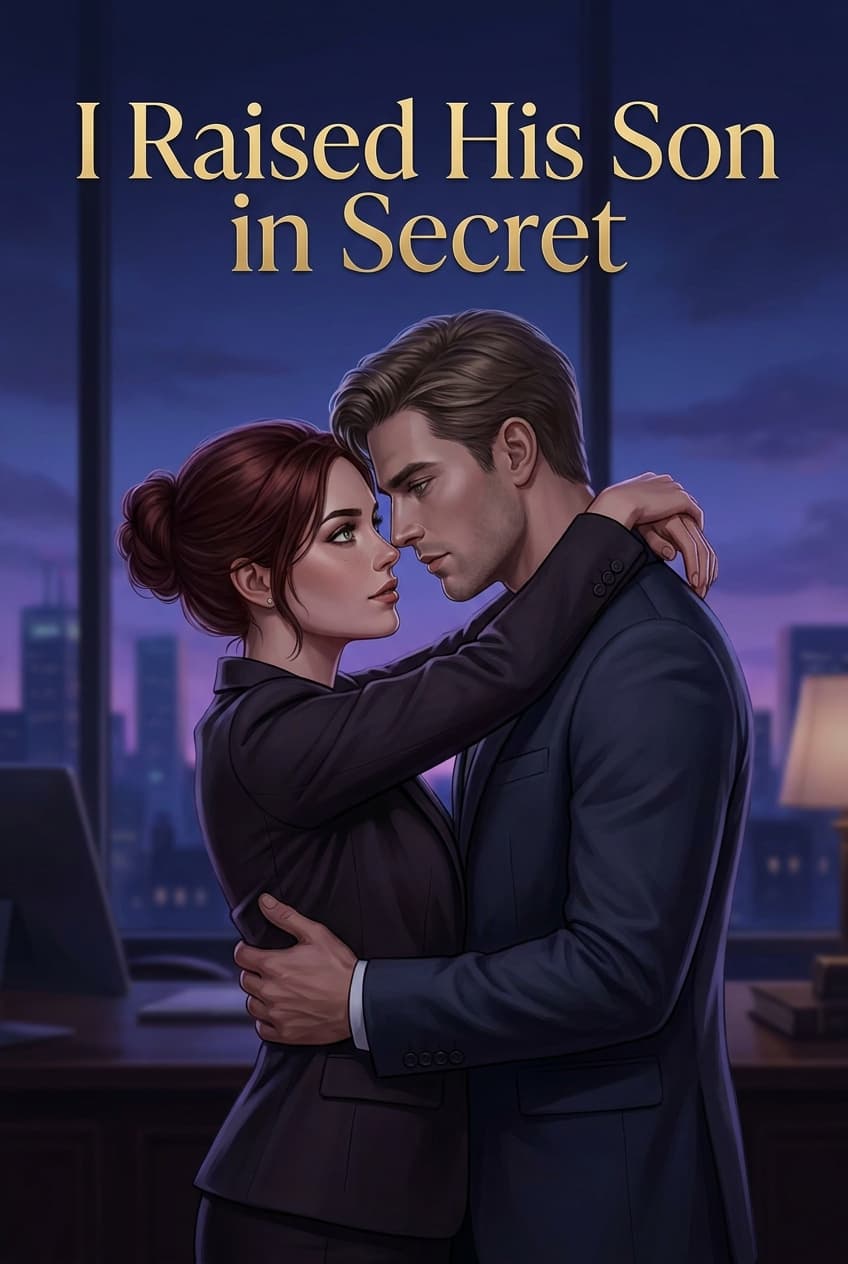
He was still in his work clothes—expensive suit, tie loosened, dark hair slightly disheveled. He smelled like cedarwood and rain and something else, something uniquely Adrian that made my chest tighten.
"Victoria called me," he said quietly. "Told me you were here."
I finished the phrase I was on, let the final notes fade into silence. My hands trembled as I lowered them to my lap.
"You bought this piano."
"Yes."
"It's too much."
Adrian moved into the room with that careful, deliberate grace of his. "You don't get to decide what's too much. You don't get to make that call for me."
He sat beside me on the bench, and suddenly the room felt very small. The space between us felt charged with something electric and dangerous and absolutely necessary.
"I've been avoiding you," I said, because apparently my self-preservation instincts had taken a holiday.
"I know."
"Because I'm terrified."
"I know that too." He turned to face me, and his blue eyes were so intense I had to look away. "Eleanor, look at me."
I didn't want to. Looking at him meant acknowledging the truth I'd been running from since the moment he'd kissed me at the gala. But I did it anyway, because apparently I was capable of being brave when it mattered.
"I'm not Richard," Adrian said, and his voice was low and certain. "I'm not going to trap you or control you or make you small. I'm not interested in collecting you like some trophy. I want to—" He stopped, and for the first time, I saw uncertainty cross his features. "I want to build a life with you. A real one. Where you get to be exactly who you are, even when that means being difficult and sarcastic and absolutely infuriating."
"Adrian—"
"Let me finish." He reached out and tucked a strand of hair behind my ear, his fingers lingering against my jaw. "I've been in love with you for three years. Since before Richard died. Since long before the gala. And I know that's overwhelming and probably terrifying, but it's also true. It's the truest thing I know."
My heart was hammering so hard I thought it might break through my ribs.
"What if you change your mind?" The question came out small, vulnerable, completely unlike me.
"I won't." Adrian's thumb traced my cheekbone. "But even if I did—even if I were the kind of man who changes his mind about important things—that would be my mistake to make. Not yours. You don't get to protect yourself by running from me, Eleanor. That's not protection. That's just another kind of cage."
Victoria's words echoed in his, and I realized they'd probably conspired. The thought should have infuriated me. Instead, it made me want to laugh and cry simultaneously.
"I don't know how to do this," I whispered. "I don't know how to be loved without being owned."
"Then we'll figure it out together." Adrian leaned closer, and I could feel the warmth radiating off him. "We'll figure out what it looks like when two people choose each other every single day, without conditions or cages or expectations. We'll build it from scratch, brick by brick, until it's something we both recognize as home."
He was going to kiss me. I could feel it in the way he was looking at me, the way his hand had slid to the back of my neck, the way the space between us had narrowed to something infinitesimal and charged.
I should have stopped him.
Instead, I closed the distance.
The kiss was different than the one at the gala. That one had been public, performative, a statement made for witnesses. This one was private and raw and absolutely devastating. His lips were warm, and he tasted like the expensive whiskey I'd seen him drink at the gala, and his hand in my hair was possessive in a way that should have frightened me but instead made me feel claimed in the best possible way.
When he pulled back—and he did pull back, because apparently Adrian had more self-control than I did—I was breathing hard and my carefully constructed walls were in ruins around me.
"I'm still terrified," I said.
"Good." Adrian rested his forehead against mine. "That means it matters."
My phone buzzed. Then again. And again.
Adrian pulled back slightly, amusement flickering across his features. "Is that—"
"James," I said, pulling out my phone to see three increasingly frantic messages. We need to talk about the foundation's audit. Eleanor, this is serious. Call me immediately.
"Let me guess," Adrian said, his tone turning dark. "He's found something he thinks he can use against you."
"Probably." I set the phone down without responding. "We should—"
"We should not." Adrian took my hand. "We should sit here. On this bench. At this piano. And we should figure out what comes next."
"Adrian, if James has found something in the foundation's records—"
"Then we'll handle it." His voice was absolute. "Together. That's the part you need to understand, Eleanor. You're not alone anymore. Whatever comes next, we face it together. No running. No hiding. No building walls between us."
I wanted to argue. I wanted to point out that this was precisely how people got hurt, how they became vulnerable, how they ended up trapped. But looking at him—at his dark intensity and his absolute certainty and the way he was looking at me like I was the answer to every question he'd ever asked—I realized something.
I was already trapped.
Just not in the way I'd feared.
I was trapped by the way he made me feel seen. By the way he'd donated a piano to a shelter because he knew I cared. By the way he was sitting here, holding my hand, asking me to trust him with the most fragile parts of myself.
I was trapped, and for the first time in my life, I didn't want to escape.
"Okay," I said softly.
"Okay?"
"Okay, we figure it out together." I squeezed his hand. "But Adrian, if this is a game—if you get bored or change your mind or—"
He silenced me with a kiss, brief and decisive.
"Not a game," he said. "This is the only thing I've ever been certain about."
My phone buzzed again. James, relentless.
Adrian picked it up and turned it off without asking permission. The small act of dominance should have triggered every protective instinct I had. Instead, it felt like trust. Like him taking something off my shoulders so I could breathe.
"Come home with me," he said.
"Adrian—"
"Not like that. Well, not just like that." He smiled, and it was wicked and warm and absolutely irresistible. "Come home with me. Let me feed you. Let me show you what it looks like when someone takes care of you without trying to own you."
I should have said no. I should have gone back to the foundation and dealt with whatever James had discovered. I should have maintained appropriate boundaries and professional distance and all the other things that kept me safe.
Instead, I stood up and let Adrian pull me toward the door.
Behind us, the piano gleamed in the afternoon light—a gift from someone who loved me, a reminder that beautiful things could exist in the world, that people could choose to build instead of destroy.
As we stepped out into the London afternoon, Adrian's hand warm in mine, I realized something terrifying and wonderful.
I was choosing to believe him.
And that choice, more than anything, was going to change everything.