The Ashford Foundation's annual gala was held at the Metropolitan Museum, which meant I'd spent the better part of the afternoon mentally calculating how much of my evening would be spent making small talk with people who'd never actually read our mission statement. The answer was: all of it.
I adjusted the clasp of my grandmother's diamond necklace—one of the few things Richard hadn't managed to taint with his presence—and surveyed the ballroom with the kind of clinical assessment usually reserved for crime scenes. Everything was precisely where it should be. Waiters in crisp white gloves circulated with champagne. The string quartet was playing something appropriately classical and aggressively inoffensive. The silent auction items were arranged on tables that cost more to rent than most people's monthly rent.
It was perfect.
It was also suffocating.
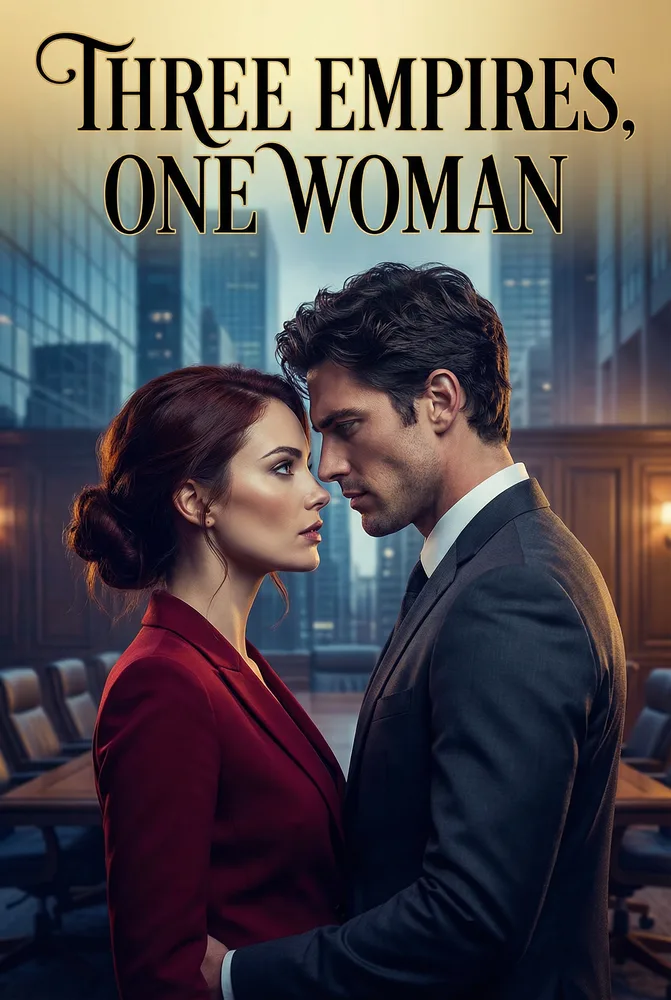
I'd worn black, naturally. A floor-length gown that was cut close enough to be interesting but structured enough to feel like armor. My hair was in its usual severe bun, not a strand out of place. I looked like exactly what I was: a woman in complete control.
The irony was that I felt like I was barely holding it together.
"You look like you're about to execute someone," Victoria said, appearing at my elbow with two glasses of champagne. She was dressed in a stunning emerald silk that somehow made her silver-streaked hair look like an asset rather than a sign of age. "Though I suppose that's not entirely inaccurate. Half of these people are only here because they're terrified of you."
"That's the idea," I said, accepting the champagne. "Fear is the most effective social lubricant. Much more reliable than actual warmth."
Victoria gave me that look—the one that suggested she was seeing straight through my bullshit and finding it exhausting. "One of these days, you're going to realize that being a fortress and being safe aren't the same thing."
"And one of these days, you're going to stop trying to psychoanalyze me at charity events." I took a sip of champagne. It was excellent, which meant I'd chosen the right vintage. "How's the new client? The one with the penthouse in Tribeca?"
She let me change the subject, which was its own kind of kindness. We talked about interior design for exactly four minutes before James Pembroke materialized out of the crowd like a particularly well-dressed specter.
He was wearing a tuxedo that probably cost more than my first apartment, his sandy blonde hair artfully tousled in a way that screamed "I spent forty-five minutes making this look effortless." His smile was all teeth and no substance.
"Eleanor," he said, taking my hand before I could decide whether I wanted him to. His grip was warm, slightly damp. "You look absolutely radiant. Doesn't she look radiant, Victoria?"
Victoria's expression could have frozen vodka. "I was just leaving. Eleanor, I'll find you later?"
It wasn't a question, which I appreciated. She squeezed my shoulder—a gesture that felt like a warning and a promise simultaneously—and disappeared into the crowd.
"Your sister-in-law doesn't seem to like me very much," James observed, still holding my hand like it was a prize he'd won at auction.
I extracted it with the kind of polite firmness that had become second nature. "Victoria is perceptive. That tends to make her unpopular with certain people."
His smile didn't waver, but something flickered behind his eyes. Something sharp and resentful.
"I wanted to talk to you about the estate," he said, guiding me toward one of the quieter corners of the ballroom. His hand found the small of my back, and I had to consciously resist the urge to move away. "My lawyers have been reviewing Richard's will, and there are some provisions that I think deserve further discussion."
"Your lawyers," I repeated flatly. "James, Richard's will was probated two years ago. By actual lawyers. In an actual courtroom. What exactly did they miss?"
"Nothing missed," he said smoothly. "More like... overlooked opportunities. Richard always intended for the family to maintain control of the foundation. It would be a shame to see it drift into the hands of someone without the proper Ashford pedigree."
There it was.
Not even particularly well-buried, the implication that I—a woman who'd spent five years watching my husband build an empire while ignoring my existence—didn't have the right to run the thing I'd been running successfully for the past two years. The thing that had actually helped people, unlike Richard's endless accumulation of wealth and power.
"How fascinating," I said, my voice dropping to that particular register that made people nervous. The one that suggested I was about two seconds away from doing something they wouldn't enjoy. "Because I have actual documentation of Richard's intentions, which apparently your lawyers missed. Also, I have his signature. Also, I have the law. Shall I continue, or would you like to concede now and save yourself the embarrassment?"
James's jaw tightened. "You were never his equal, Eleanor. You were his wife. There's a difference."
The words landed like a physical blow, which was probably the point. He'd been drinking, I realized. Just enough to loosen the careful social mask he usually wore, just enough to let the bitterness underneath start seeping through.
"And yet," I said, "I'm the one running the foundation, and you're the one begging for scraps. So I'm not entirely sure what your point is."
"My point," he said, leaning closer, his voice dropping low enough that only I could hear, "is that Richard would have wanted his legacy to stay in the family. Real family. Not some cold, ungrateful woman who couldn't even manage to give him an heir."
The ballroom suddenly felt very small.
There was a roaring in my ears that might have been anger or might have been fear—I'd never been entirely sure of the difference. Richard had said similar things during our marriage, usually at three in the morning when he'd had too much to drink and too many disappointments to process. The implication that my failure to get pregnant was a personal betrayal, a deliberate refusal to give him what he deserved.
I'd stopped trying after the third miscarriage.
I'd stopped trying to be what he wanted after the fifth year.
"If you have nothing else," I said carefully, "I have donors to attend to."
I turned to leave, but James caught my wrist. Not hard enough to hurt, but firm enough to be unmistakable. A claim. A warning.
"This isn't over, Eleanor. You're going to regret—"
"She's going to regret what, exactly?"
Adrian's voice was quiet. That was the dangerous part. Not loud or theatrical, just a simple question posed in a tone that suggested he was genuinely curious about the answer, in the way a predator might be curious about its prey.
He materialized out of the crowd like a dark thought made flesh, and suddenly James's hand on my wrist felt like a liability. Adrian's eyes—those intense, impossible blue eyes—tracked the contact with the kind of focus usually reserved for microscopes and interrogations.
"Blackwood," James said, his voice taking on that forced cheerfulness of someone who'd just realized they'd made a tactical error. "Didn't know you were here tonight."
Adrian didn't respond to him. He was looking at me, and there was something in his expression that made my pulse do something complicated and involuntary. Something that suggested he was approximately three seconds away from doing something that would make the society pages very interesting indeed.
He reached out, and his hand found the small of my back—the same spot where James's hand had been, but it felt entirely different. It felt like a declaration.
"Let her go," Adrian said conversationally.
James laughed, but it came out strained. "Now, Blackwood, I was just having a conversation with—"
"I'm not going to ask again."
The temperature in the ballroom seemed to drop approximately fifteen degrees.
James released my wrist like it had suddenly become radioactive, and I was too surprised to do anything but watch as Adrian smoothly positioned himself between us, his body language making it abundantly clear that he was claiming territory. His hand remained on my back, warm and possessive, and I should have been irritated by the caveman theatrics of it all.
Instead, I was very aware of my heart rate and the fact that I was holding my breath.
"I think you should leave," Adrian said to James, not bothering to look at him anymore. "Before I decide that you're a liability."
James looked between us, clearly calculating odds and finding them unfavorable. "This isn't finished."
"It's finished," Adrian said flatly. "You're finished. If you come near Eleanor again, if you contact her, if you so much as look at her across a room, I will make it my personal mission to ensure that you regret every decision that led to this moment. Am I being clear?"
The threat was delivered with such casual certainty that it took me a moment to realize he'd just, in front of approximately fifty witnesses, essentially declared war on a member of the Ashford family on my behalf.
James left, his jaw clenched so tight I was surprised his teeth didn't crack.
Adrian's hand remained on my back.
I should have moved away. I should have made some cutting remark about his Neanderthal approach to conflict resolution. I should have done approximately seven things that would have maintained the careful distance I'd maintained with him since he'd started showing up at foundation meetings.
Instead, I stood there, hyperaware of every point of contact between his body and mine.
"You can't do that," I said finally, my voice not quite steady. "You can't just threaten people in the middle of a charity gala."
"I just did." He turned his head slightly, and I caught the scent of him—cedarwood and that particular darkness that belonged to him alone. "Did he hurt you?"
"No, I—"
"Your wrist," he said, and I realized he was looking at the red marks where James's fingers had been. Adrian's hand tightened on my back, and there was something in his expression that suggested he was having violent thoughts. "He hurt you."
"It's nothing," I said, which was technically true and also a complete lie. "Really. I've survived worse."
The moment the words left my mouth, I regretted them. Because Adrian's eyes met mine, and there was something in them that suggested he knew exactly what I meant. That he'd been aware, all along, of the kind of marriage I'd survived. That he'd watched Richard destroy me slowly, methodically, like a man crushing an insect under his shoe.
"Not anymore," Adrian said quietly. "You won't survive worse anymore, Eleanor. Not if I can help it."
It was possessive and controlling and probably deeply unhealthy, and I should have called him out on it. Instead, I felt something in my chest crack open—something that had been frozen solid for five years.
"We should probably return to the event," I said, my voice barely a whisper. "People are staring."
"Let them stare."
His hand moved from my back to my waist, pulling me closer until there was barely any space between us. Close enough that I could feel the heat radiating off his body. Close enough that breathing felt like a conscious decision I had to make.
"Adrian," I said, and his name came out like a warning and a plea simultaneously.
"Tell me to stop," he said, his voice rough around the edges. "Tell me to let you go, and I will."
I should have. I absolutely should have.
I didn't.
Instead, I stood there in the middle of the Metropolitan Museum's ballroom, surrounded by New York's most prominent philanthropists, and let myself be consumed by the proximity of him. His hand at my waist, warm and certain. The scent of him, dark and intoxicating. The intensity in his eyes, which suggested that he would burn the entire building down if I asked him to.
"This is a terrible idea," I said instead of the words he was waiting for.
"Probably," he agreed. "Does that change anything?"
"It should."
"But it doesn't."
The string quartet started playing something new—something with minor keys and a haunting melody. Around us, couples moved across the dance floor, and I realized Adrian was swaying slightly, pulling me with him.
We weren't dancing, exactly. It was more like two people standing in the same space, pretending that the space between them was still there.
"People are talking," I said weakly.
"Good." His thumb traced a small circle on my waist, and my breath caught. "Let them talk. Let them see that you're not available anymore."
"I'm not—"
"You are," he said, and there was something in his voice that suggested this wasn't a request or a suggestion. This was a declaration. "You've been mine since the moment I walked into that foundation meeting and you looked at me like I was the most irritating thing you'd encountered in years."
"That's not how ownership works," I said, but my voice had lost its edge.
"No," he agreed. "But it's how I work. I see something I want, and I take it. I've been watching you for five years, Eleanor. Watching you waste away in a marriage to a man who didn't deserve to breathe the same air as you. And now he's gone, and you're finally free, and I'm not going to let you disappear into that fortress of yours while you convince yourself that solitude is the same as safety."
His hand moved from my waist to the curve of my spine, and I realized I was trembling.
"You don't get to make decisions about my life," I said, but the words felt hollow even as I said them.
"No," he agreed. "But I can make decisions about mine. And I've decided that I'm not leaving you alone anymore."
He leaned closer, and I thought—for one perfect, terrible moment—that he was going to kiss me. Right there, in front of everyone, in front of the society pages and the photographers and James Pembroke, who was watching us from the other side of the ballroom with an expression of pure venom.
He didn't.
Instead, he pressed his forehead to mine, and we stood there like that—breathing the same air, suspended in a moment that felt like it might shatter if either of us moved too quickly.
"I need to check on the auction," I said finally, pulling away before I did something I couldn't take back.
Adrian released me, but his hand lingered on my waist for a moment longer than necessary. "I'll be right behind you."
"That's not—"
"I know it's not what you want," he said. "But it's what's going to happen anyway."
I left him standing there in the middle of the ballroom, my heart rate still elevated, my skin still warm where his hand had been.
Victoria found me ten minutes later, examining the silent auction items with the kind of intensity usually reserved for defusing bombs.
"Oh, Eleanor," she said softly, and I didn't even have to look at her to know she was smiling. "You're absolutely smitten."
"I'm absolutely not."
"You're trembling."
"I'm cold."
"You're wearing a gown that costs more than most people's cars, and you're standing next to a heat lamp. Try again."
I turned to face her, and she took in my expression with the kind of satisfaction that suggested she'd just won an argument she hadn't been having.
"He's dangerous," I said.
"Yes," Victoria agreed. "Probably. But so are you, darling. Maybe that's the point."
"The point is that I've spent five years building a life where I don't need anyone. Where I'm safe because I'm alone."
"And how's that working out?" Victoria asked gently.
I didn't answer, because the truth was that it wasn't working out at all. It was working out so poorly that I'd let Adrian Blackwood back me into a corner at a charity gala and felt grateful for it.
Across the ballroom, James Pembroke was watching us with an expression that suggested he was mentally rearranging the chessboard. Reassessing. Planning his next move.
And I realized, with a clarity that felt like ice water, that this wasn't over. James had shown his hand tonight—had revealed the bitterness underneath his charm, the entitlement that had been festering since Richard's will was read.
He wasn't going to let this go.
Adrian appeared at my other side, a glass of champagne in his hand, and I felt the weight of his presence like a physical thing. Protective. Possessive. Dangerous.
"We should talk," Adrian said quietly, for my ears only.
"About what?" I asked, though I already knew the answer.
"About the fact that James just contacted someone on his phone, and that someone looked very interested in whatever he had to say."
My stomach dropped.
"What are you suggesting?"
"I'm suggesting," Adrian said, "that James Pembroke is about to make a move. And I'm suggesting that you're going to let me help you prepare for it."
"I don't need—"
"You do," he interrupted. "And for once in your life, you're going to let someone else carry part of the weight."
He set his hand on the small of my back again, and I felt the warmth of it seep through the fabric of my dress.
James was still watching us from across the ballroom, and his expression had shifted into something far more calculating.
The cracks in my carefully constructed ice were getting wider.
And I was starting to suspect that I wasn't going to be able to stop the thaw, no matter how hard I tried.